Haute Gastronomy & Wine
High-Altitude Haute Cuisine: 3-Star Dining Above 2,000m
By Éléonore de Saint-Germain
•
9 Min In-Depth Read
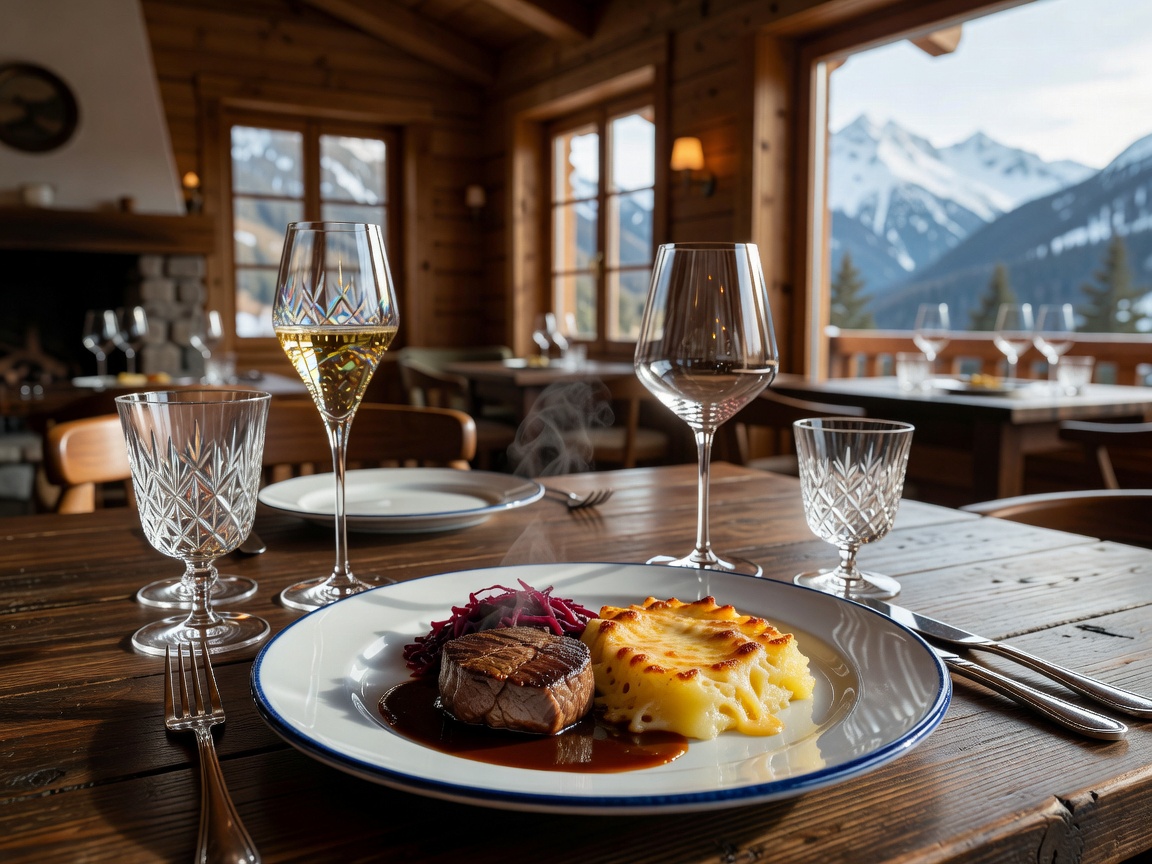
Preparing a three-star Michelin tasting menu in Paris, London, or Tokyo is an exercise in pinpoint precision. Doing so atop a sub-zero alpine peak—where atmospheric pressure changes how water boils, air dryness dulls human taste buds, and supply chains depend on snowmobiles—requires sheer culinary genius.
At 2,000 meters above sea level, water boils at approximately 93°C rather than 100°C. For sauces requiring slow reduction and meats demanding precise sous-vide thermal control, master chefs recalibrate cooking times down to the second. Furthermore, dry alpine air diminishes human olfactory perception by up to 15%. Chefs compensate by concentrating wild mountain juniper, fermented spruce tips, pine cone infused broths, and intensified alpine truffle reductions.
Fine Burgundy, Bordeaux Premier Crus, and aged Champagnes are hypersensitive to atmospheric barometric shifts. Luxury properties such as The Little Nell and Badrutt’s Palace utilize computerized humidity and vibration dampening vaults to protect delicate vintages from rapid oxidation and cork shrinkage in dry mountain winter climates.
Storysignalcrewpi maintains direct relationships with head sommeliers and maître d’s throughout the European and North American Alps.
Reserve Dining Access